首頁 > MATERIALS

MATERIALS | MATERIALS

Material Comparison

  1. Item
  2. Unit
  3. ALN
  4. 96% Al₂O₃

  5. SI₃N₄
  6. Colour
  7. -
  8. Gray
  9. White
  10. Gray
  11. Density
  12. g/cm³
  13. ≥3.33
  14. ≥3.7
  15. ≥3.2
  16. Thermal Conductivity
  17. 20℃,W/(m·K)
  18. ≥170
  19. ≥24
  20. ≥80
  21. Dielectric Constant
  22. 1MHz
  23. 8~10
  24. 9~10
  25. 7.8
  26. Dielectric Strength
  27. KV/mm
  28. ≥17
  29. ≥17
  30. ≥32
  31. Flexural Strength
  32. MPa
  33. ≥450
  34. ≥350
  35. ≥700
  36. Camber
  37. Length‰
  38. ≤2.5‰
  39. ≤3‰
  40. ≤3‰
  41. Surface roughness Ra
  42. μm
  43. ≤0.6
  44. ≤0.75
  45. ≤0.6
  46. Water absorption
  47. %
  48. 0
  49. 0
  50. 0
  51. Volume resistivity
  52. 20℃,Ω.cm
  53. ≥10¹³
  54. ≥10¹⁴
  55. ≥10¹³
  56. Thermal expansivity
  57. 10-6℃
    • 20~300℃
    • 300~800℃
  58. 6.5~7.5
    6.5~8.0
  59. 2.5~2.8
    6.5~8.0
  60. 25~300℃
    2.5~2.8
  61. Parameter Composition Statement: Due to differences in formulation and sintering processes, the final product of ceramic objects may have slight errors in the material property values (Data Sheet), which is within the normal acceptable range. The data provided here is for reference and comparison purposes only and should not be interpreted as absolute engineering data. Actual data may vary depending on product configuration. This data does not constitute a guarantee of legal liability.
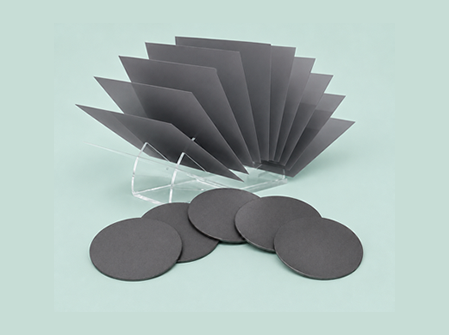
  1. Aluminum Nitride (AlN) Substrate

    • High Thermal Conductivity Ceramic Material for Advanced Ceramic PCB Applications

      Aluminum Nitride (AlN) is a widely used advanced ceramic material for high-power electronic applications due to its high thermal conductivity, excellent electrical insulation, and coefficient of thermal expansion (CTE) closely matched to silicon.
      AlN ceramic substrates are widely used in DPC (Direct Plated Copper), DBC (Direct Bonded Copper), and AMB (Active Metal Brazing) ceramic substrate technologies, making them suitable for power electronics, semiconductor packaging, RF communication, and AI computing applications.
    • Key Material Properties
      1. Thermal Conductivity: Typically 170–230 W/m·K, depending on material grade and manufacturing process
      2. Excellent Electrical Insulation
      3. Low Dielectric Constant
      4. Coefficient of Thermal Expansion (CTE) Closely Matched to Silicon
      5. Excellent Thermal Shock Resistance
      6. High Temperature Stability
      7. Good Chemical Stability
      8. Suitable for High-Power and High-Reliability Applications
    • Engineering Advantages
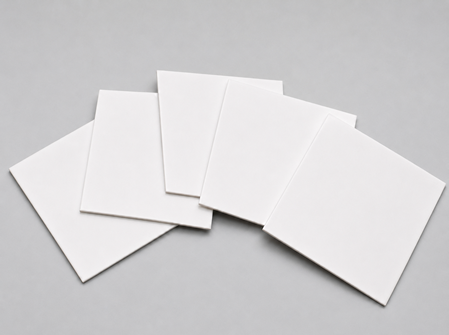
  2. 96% Alumina (Al₂O₃) Substrate

    • Cost-Effective Ceramic Substrate for Reliable Electronic Applications

      96% Alumina (Al₂O₃) is one of the most widely used ceramic substrate materials in the electronics industry. It offers an excellent balance of electrical insulation, mechanical strength, chemical resistance, and manufacturing cost, making it suitable for a wide range of electronic applications.
      96% Alumina substrates are suitable for Thick Film Printing and DPC (Direct Plated Copper) processes. Depending on design requirements and manufacturing capabilities, they may also be used in selected DBC ceramic substrate applications.

    • Key Material Properties
      1. Thermal Conductivity: Approximately 24 W/m·K, depending on material grade
      2. Excellent Electrical Insulation
      3. High Mechanical Strength
      4. Good Wear and Corrosion Resistance
      5. Mature Manufacturing Process
      6. Cost-Effective for Volume Production
      7. High Dimensional Stability
      8. Excellent Chemical Resistance
    • Engineering Advantages
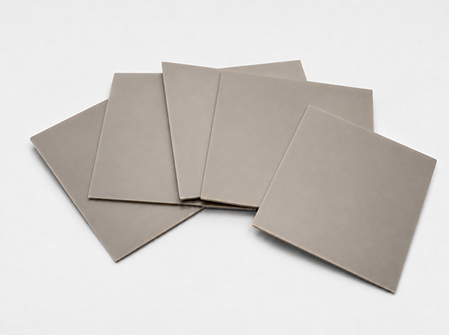
  3. Silicon Nitride (Si₃N₄) Substrate

    • High-Reliability Ceramic Substrate for Advanced Power Electronics

      Silicon Nitride (Si₃N₄) is a high-reliability advanced ceramic material widely used for demanding power electronics applications. It offers high mechanical strength, excellent fracture toughness, strong thermal shock resistance, and reliable performance under severe operating conditions.
      Compared with conventional ceramic substrates, Silicon Nitride provides excellent durability and thermal cycling reliability, making it well suited for power modules used in electric vehicles, renewable energy systems, industrial power electronics, and other demanding applications.
      Silicon Nitride ceramic substrates are primarily used in AMB (Active Metal Brazed) ceramic substrate technology for high-reliability power electronics.

    • Key Material Properties
      1. High Mechanical Strength
      2. Excellent Fracture Toughness
      3. Outstanding Thermal Shock Resistance
      4. Excellent Thermal Cycling Reliability
      5. High Electrical Insulation
      6. High Temperature Stability
      7. Long Service Life
      8. Suitable for Harsh Operating Environments
    • Engineering Advantages
TOP